
SCALE-MX Best Practices Event
at Uhlmann Group Holding SE
The Industrial Data Room as an Opportunity for Sustainable Value Creation
Review: SCALE-MX Best Practice Event at Uhlmann Group Holding SE on May 19, 2026, in Laupheim
The Industrial Data Room as an Opportunity for Sustainable Value Creation
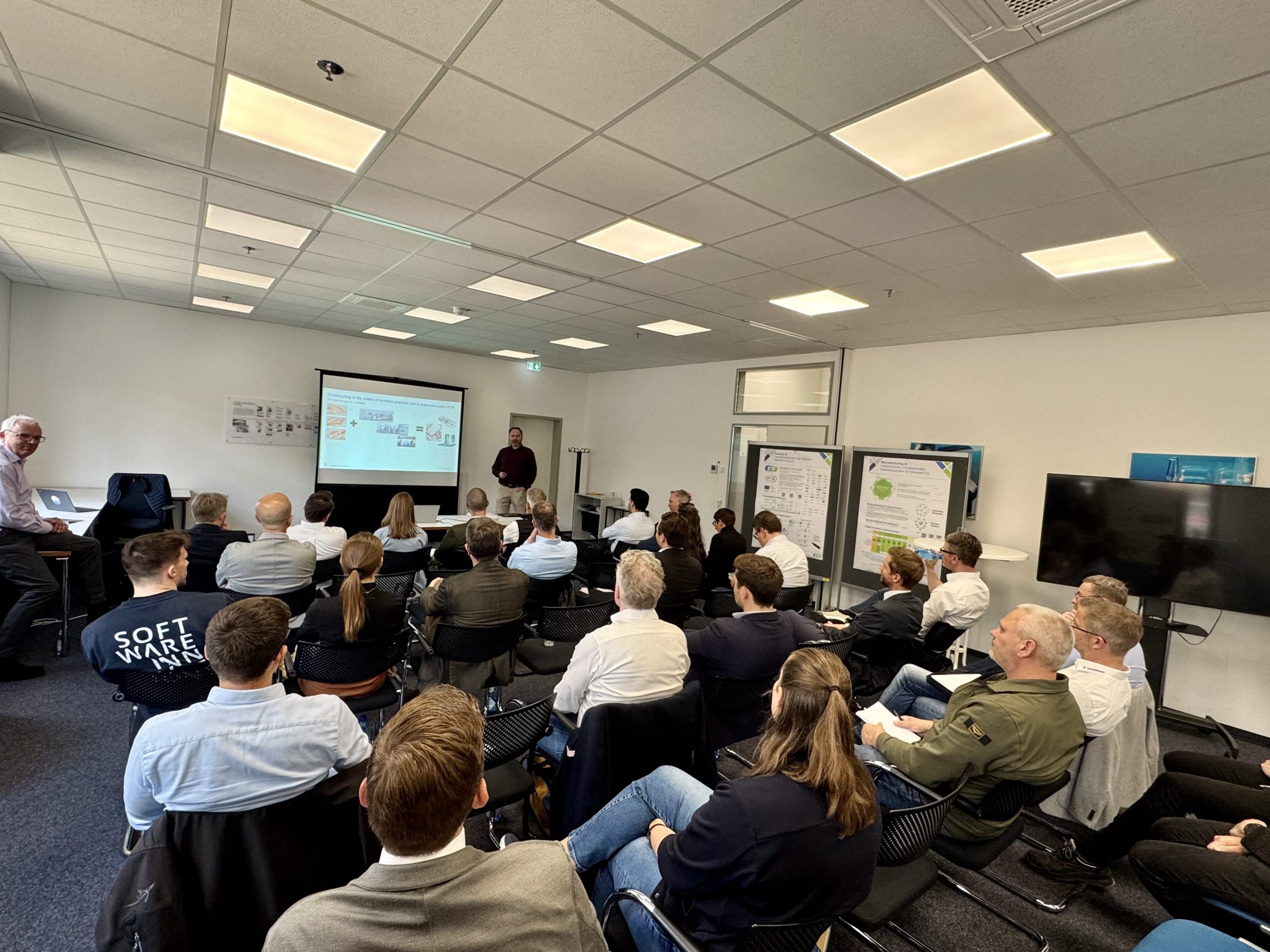
How can industrial data rooms help companies make value creation more sustainable, efficient, and resilient? This question was the focus of the SCALE-MX Best Practice Event held on May 19, 2026, at Uhlmann Group Holding SE in Laupheim. In collaboration with the Ulm Chamber of Commerce and Industry (IHK Ulm) and Factory-X, the event brought together representatives from industry, technology, and research to discuss concrete applications and the potential of data-driven ecosystems.
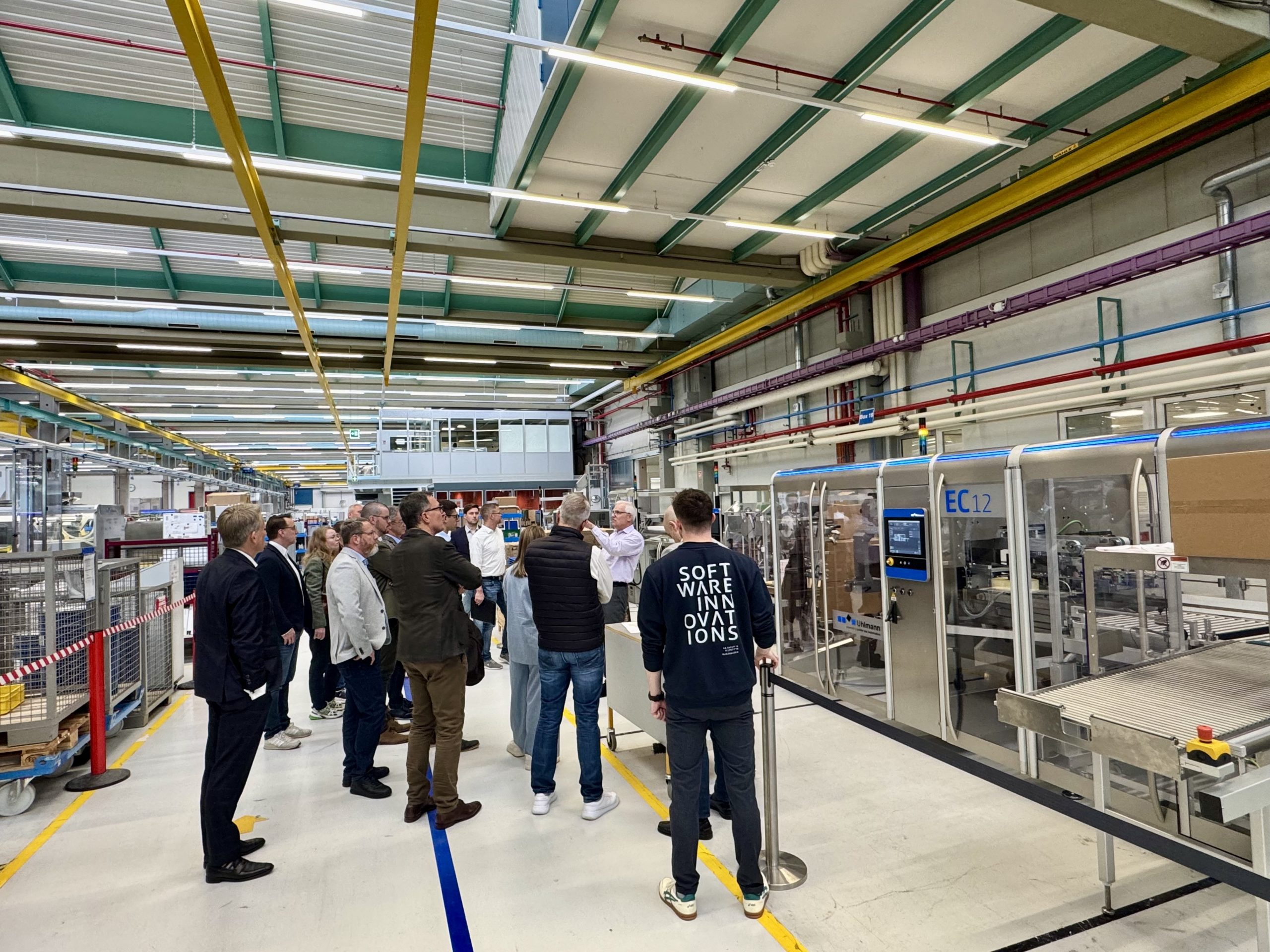
Right from the start, participants gained fascinating insights into production and the “Energy Consumption and Load Management” demonstrator during a guided tour of the Uhlmann plant. Concrete examples illustrated how digital technologies and standardized data exchange can help make energy consumption more transparent and streamline production processes.
The subsequent technical program focused on practical use cases and specific examples from the X projects:
Matthias Scharpe of SCALE-MX explained how secure and seamless data exchange lays the foundation for new digital business models. He highlighted the importance of the digital twin, the Asset Administration Shell (AAS), and the digital product passport for industrial data spaces.
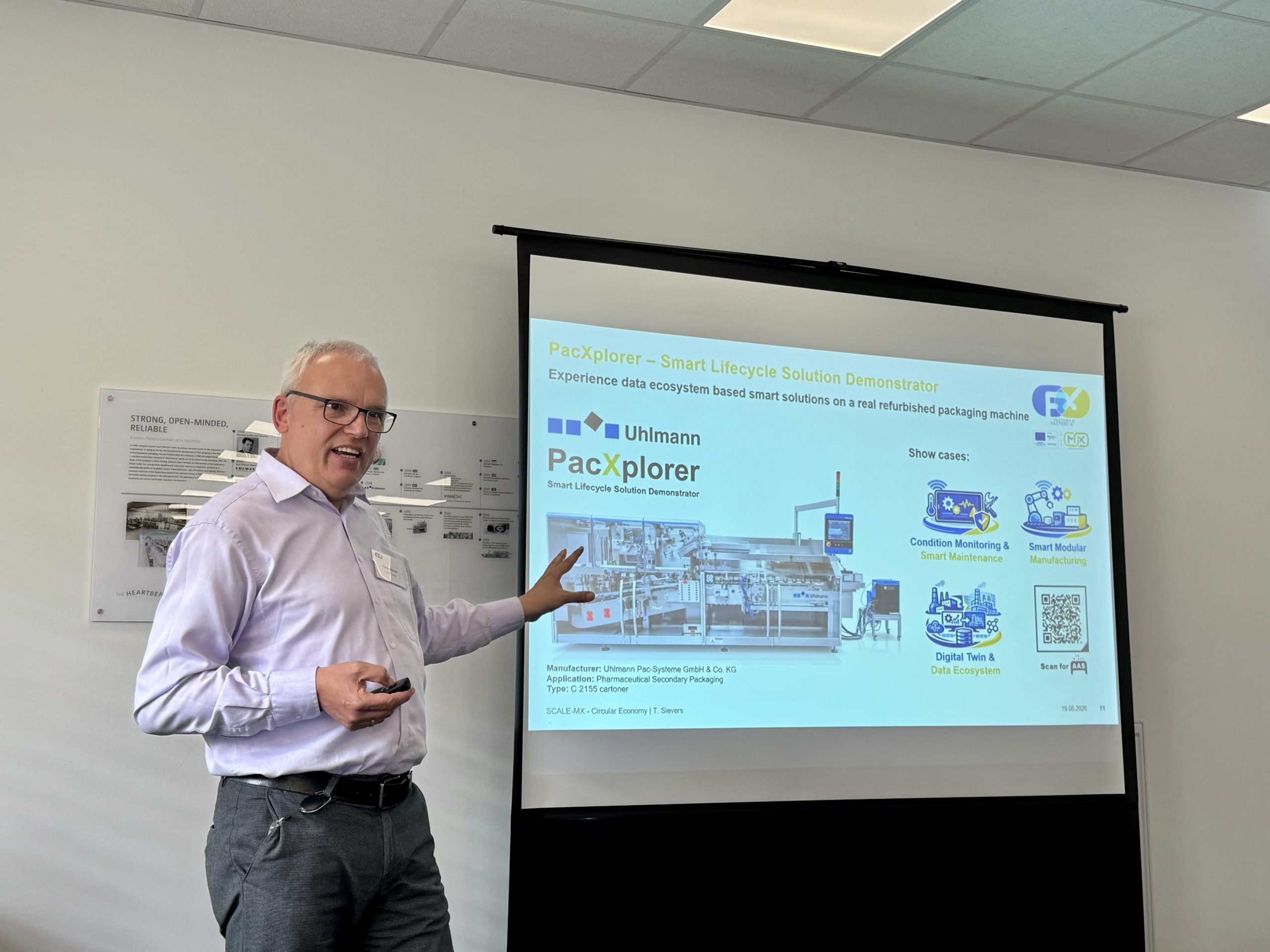
Thomas Sievers presented Factory-X use cases in the field of the circular economy. The focus was on data-driven approaches to sustainable business models as well as decisions regarding remanufacturing, refurbishment, and recycling.
Stefan Dürnay presented practical examples from HealthTrack-X—ranging from digital supply chains and security of supply to the standardized exchange of CO₂ data throughout the value chain.
Using the "Condition Monitoring-Led Services" use case, Kay Andorf demonstrated how machine operators, OEMs, and component suppliers can work together to streamline service processes and resolve service cases more quickly.
Another highlight of the program was the interactive SCALE-MX simulation game “EcoChain” with Anna Dieckvoss. Participants were able to experience firsthand how standardized data exchange creates transparency throughout the supply chain and supports sustainable decision-making.
To conclude the event, Julia Wielgosch outlined specific next steps toward data room readiness based on five key areas of focus and presented the SCALE-MX Readiness Checklist.
The key takeaway of the day:
The use cases presented clearly demonstrate that industrial data ecosystems can lay the foundation for more resilient, sustainable, and competitive production. The technologies, standards, and initial experiences are already in place—now the task is to begin implementation and systematically scale the potential of data-driven value creation.