
M-Xperience - Manufacturing-X in dialog

Multilateral data sharing and cross-company cooperation promise alternative value creation potential. But how can the digital transformation in mechanical engineering and the entry for small and medium-sized companies succeed?
In our "M-Xperience" dialog series, we want to give you a broad overview of the Manufacturing-X data ecosystem, the results of the MX projects, the underlying technologies and the corresponding requirements for connecting to the data ecosystem for your company.
Through our series of webinars, each building on the previous one and covering the various key topics of Manufacturing-X, you’ll gain a deeper understanding of the industrial data economy and, through expert presentations, gain interesting and practical insights into each key topic area.
Why participate?
- Gain orientation: Get to know the central initiatives such as Manufacturing-X, Industry 4.0 and the associated projects.
- Create future security: Recognize how you can remain competitive in the long term through sovereign data usage and create new business models.
- Enabling networking: Find out how data ecosystems strengthen collaboration along the value chain.
- Practical insights: Learn about the advantages and benefits for your company using concrete application examples.
- Low-threshold entry: Get the first concrete tips for entering a data ecosystem and for the requirements in your own company - without high entry hurdles.
- Dialog: Exchange ideas with experts and ask your questions.
Webinar Series
At the kickoff webinar on September 19, 2025, you received two insightful presentations from our experts:

1 Dr.-Ing. Marc Hüske: What does Manufacturing-X & SCALE-MX stand for and what insights and benefits do the X projects have for my company?
Dr. Marc Hüske, consortium leader of the SCALE-MX transfer initiative, will provide a clear overview of the current developments within Manufacturing-X and the X projects behind it. He explains how SCALE-MX shows users, suppliers and multipliers the results of the X projects and the benefits of the Manufacturing-X industrial data ecosystem and motivates them to get involved. Find out how these initiatives are driving the digital transformation of industrial production, with concrete benefits for small and medium-sized enterprises.

2 Jan Fischer: Basics of data rooms & data ecosystems and how companies can benefit from sovereign data exchange.
Jan Fischer, Data Rooms and Manufacturing-X expert, takes a closer look at the topic of data rooms and data ecosystems: What is behind these terms, what advantages do they offer SMEs in particular and how do they get started? He will provide initial practical insights into how companies can join a data room and what prerequisites need to be put in place today.
The second M-Xperience webinar focused on the topic: “Experiencing the Digital Twin with AAS and DPP in the Data Room”
The digital twin is considered a key technology for end-to-end digitalization and sustainable value creation in the product life cycle. However, many companies face challenges: Data is stored in different systems, breaks in the flow of information make collaboration difficult and sustainability can only be proven with great effort.
Moderator: Dr.-Ing. Marc Hüske
VDMA e.V., Head of the Manufacturing-X Forum,Consortium Lead forthe SCALE-MX Project
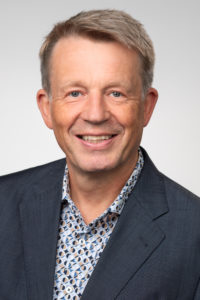
1. Matthias Scharpe: The Digital Twin in the Manufacturing-X Data Ecosystem
Matthias Scharpe, digitalization expert for data ecosystems at VDMA e.V., Forum Manufacturing-X, SCALE-MX project, demonstrated how the digital twin can be put to practical use within the Manufacturing-X framework. The focus is on data consistency. Using clear examples, it becomes evident how companies can use this approach to network their processes, avoid system silos, and improve collaboration along the value chain.
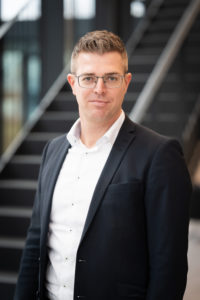
2. Dr. Christian Mosch: DAVID and the “Production” of the Digital Twin in the Data Room
Dr. Christian Mosch, Managing Director Industrial Digital Twin Association e.V. (IDTA) provided a practical insight into working with DAVID and demonstrated how data can be structured and made available for reuse throughout the product lifecycle. The Asset Administration Shell (AAS) as a unified information model and the Digital Product Passport (DPP) play a central role in this: They make data consistency, collaboration, and sustainability reporting within the network simpler and more efficient. Concrete examples illustrate how companies can take a step-by-step approach to producing digital twins.
The third M-Xperience webinar focused on the topic “Rethinking Sustainability – with Data, Transparency, and Manufacturing-X”
In the manufacturing industry, sustainability means combining economic success with environmental and social responsibility—from resource-efficient processes and the reduction of emissions to the extension of product lifecycles.
In this edition of our M-Xperience webinar series, we demonstrated how companies can drive sustainability and the circular economy in a practical way: through interconnected data spaces, uniform standards, and digital value-creation processes.
Moderator: Dr.-Ing. Marc Hüske
VDMA e.V., Head of the Manufacturing-X Forum,Consortium Lead forthe SCALE-MX Project

1. Dr. Ole Wohlenberg: From CO₂ Transparency to Value Creation: Sustainability with Manufacturing-X
Dr. Ole Wohlenberg, expert and program manager for life sciences at Niedersachsen.next, SCALE-MX, demonstrated how Manufacturing-X enables seamless, standardized data exchange between companies and along the value chain—a key prerequisite for transparently calculating carbon footprints, optimizing resource use, and evaluating recycling (circular economy) based on data. Thanks to the technical interoperability offered by Manufacturing-X, companies—especially SMEs—can meet regulatory requirements such as the CSRD while simultaneously developing new data-driven business models. In this way, sustainability becomes an integrated, economically viable business practice.
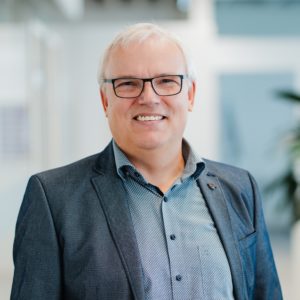
2. Thomas Sievers: “Cycles Instead of Dead Ends” – How Data Rooms Can Open the Door to the Circular Economy
Thomas Sievers, Future Business Manager at Uhlmann Group Holding SE, provided a practical insight into how future data spaces can help establish and sustainably operate simplified material and product cycles. To this end, he presented solutions from Factory-X in the context of their implementation at a Swabian mechanical engineering company. The urgency of this issue is underscored by the fact that living conditionson our planet could deteriorate dramatically in the coming decades if certain global tipping points are exceeded. Avoiding this will require significant efforts from all countries, industry, and humanity as a whole. Material cycles offer a solution that has not yet been consistently pursued. Mr. Sievers highlighted this situation and demonstrated how data rooms can be used to support these efforts.
The fourth M-Xperience webinar focused on the topic “Quality Management as a Competitive Advantage: How Manufacturing-X Transforms Industrial Processes”
Quality management in industry encompasses all measures aimed at planning, ensuring, and continuously improving the quality of products and services. The goal is to prevent defects through clear processes, standards, and transparency, rather than correcting them after the fact. Effective quality management increases efficiency and customer satisfaction, meets regulatory requirements, and builds trust, particularly in complex industrial environments.
In this edition of our M-Xperience webinar series, we demonstrated how companies can optimize their quality management using the data room: shifting from a reactive to a preventive approach.
Moderator: Dr.-Ing. Marc Hüske
VDMA e.V., Head of the Manufacturing-X Forum,Consortium Lead forthe SCALE-MX Project

1. Presentation by Tamara Stahl, ZVEI e. V.: From Reaction to Prevention – Data-Driven Quality Management with Manufacturing-X
Tamara Stahl described how fragmented data, a lack of standards, and complex supply chains hinder transparency, speed, and security in quality management. Manufacturing-X connects companies via secure data rooms and makes quality data actionable. This enables early warning systems, automated analyses, and true confidence in decision-making. This paves the way for a shift from reactive to proactive quality management.
2. Presentation by Tobias Kutzler, Fraunhofer Institute for Factory Operation and Automation IFF: “Traceability as Part of Quality Management: The Case of the Semiconductor Industry”
In his presentation, Tobias Kutzler addressed the global issue of persistent supply chain bottlenecks, which repeatedly pose challenges for logistics and production management. The semiconductor industry, in particular, is affected by procurement and delivery difficulties due to its global supply chains. The SEMICONDUCTOR-X project addresses these challenges by using modern data exchange technologies to make supply chains more resilient and sustainable. The use case of product tracking along the supply chain is intended to illustrate these challenges and potential solutions.

3. Presentation by Dr. Philipp Ganser, gemineers GmbH: Aerospace-X – Data Rooms as Enablers for Improving Product Quality and Safety in the Aviation Industry
Dr. Philipp Ganser reported on the Aerospace-X project. The project focuses on concepts and solutions for end-to-end, data-driven quality management of safety-critical aviation components throughout the entire product lifecycle. Using an industrial demonstrator, the presentation shows how federated data spaces, digital twins, and technologies such as Asset Administration Shell and Eclipse Dataspace Connector can support standardized, transparent, and sovereign collaboration between customers and suppliers. The presentation explains how this can improve transparency, traceability, and the handling of non-conformities throughout the supply chain.
The fourth M-Xperience webinar focused on the topic “Quality Management as a Competitive Advantage: How Manufacturing-X Transforms Industrial Processes”
Supply Chain Management
Transparent, flexible, and interoperable supply chains are a key competitive advantage today. In our webinar, we showed you how companies can work with their partners in the value chain to specifically address current challenges—such as a lack of transparency, insufficient system interoperability, and inflexible capacity management—within the Manufacturing-X data ecosystem.
In this edition of our M-Xperience webinar series, we demonstrated how unified open standards, consistent data availability, and end-to-end visibility can contribute to more efficient processes, better resource planning, and a future-proof data infrastructure, and how data rooms can optimize supply chain management.
Moderator: Dr.-Ing. Marc Hüske
VDMA e.V., Head of the Manufacturing-X Forum,Consortium Lead forthe SCALE-MX Project
1. Presentation by Matthias Scharpe, VDMA e. V.: The Supply Chain in the Manufacturing-X Data Ecosystem
In his presentation, Matthias Scharpe demonstrated how data-driven ecosystems such as Manufacturing-X improve supply chain management by enabling secure, standardized data exchange between companies. The goal is greater transparency, better capacity planning, and more resilient, efficient value creation networks. With standardized data spaces, supply chain management becomes future-proof—more productive, resilient, and sustainable.

2. Presentation byDr. Ulrich-Johannes Franke,IngenicsAG:The Business Value of Data Ecosystems, Using the Catena-X Use Case "Demand &Capacity Management"as an Example
Companies are facing growing pressure from volatile markets, rising costs, and new regulatory requirements. In his presentation, Dr. Ulrich-Johannes Franke explained how to determine the current Industry 4.0 maturity level and develop a realistic roadmap for the coming years. Decentralized data ecosystems such as Catena-X play a central role in this process. Using the “Demand & Capacity Management” use case, he demonstrates specifically the economic value Catena-X creates and how effort, costs, efficiency, and savings potential are interrelated.
The sixth M-Xperience webinar focused on the topic “Collaborative Engineering –Greater Efficiency and Innovation Through Collaborative Engineering with Manufacturing-X”
Collaborative engineering is an approach to product development in which various stakeholders—often from different disciplines and across different locations—work together to develop a product. The goal is to enhance efficiency, quality, and innovation in the development process through close collaboration.
In this edition of our M-Xperience webinar series, we demonstrated how companies can improve efficiency, sustainability, and the pace of innovation through secure data exchange across the value chain. This enables engineering processes to evolve in a realistic way through collaboration.
Moderator: Dr.-Ing. Marc Hüske
VDMA e.V., Head of the Manufacturing-X Forum,Consortium Lead forthe SCALE-MX Project
1. Tamara Stahl: "From Sequential to Parallel Engineering: Collaboration in the Data Room with Manufacturing-X"
In her presentation, Tamara Stahl, Manager of Industrial AI & Data Economy at ZVEI e.V. and SCALE-MX, addressed two key questions: Why are traditional engineering processes reaching their limits today? And how can we make the transition from sequential handoffs to true parallel collaboration across organizational boundaries? The decisive success factor for the industry lies in collaborative engineering using the data space. Attendees learned how mechanical engineering, electrical engineering, and software development can work simultaneously on a shared, consistent data foundation, and how this eliminates waiting times, makes integration issues visible early on, and significantly speeds up development cycles.

2. Dr. Björn Sautter: “Improved Engineering Performance Through Seamless Data Exchange Within the Ecosystem”
Dr. Björn Sautter, Senior Expert for Industry 4.0 Ecosystems at Festo SE & Co. KG, provided practical insights into how standardized data models and interfaces within the digital ecosystem can significantly accelerate the complex engineering of machines and thereby enhance a company’s competitiveness. After all,modern mechanical engineering, speed is of central importance. Time-to-market is becoming a decisive factor in international competition. This is where Factory-X comes in with its use case Collaborative Engineering & Integrated Toolchains.
The seventh M-Xperience webinar focused on the topic "Service-oriented value creation— data-driven services and digital business models with Manufacturing-X"
Due to digitalization, rising customer expectations, and global competition, companies in the mechanical and plant engineering sector are under pressure to evolve from mere product suppliers into providers of comprehensive, value-driven solutions.
For the manufacturing industry, production efficiency is a key business lever.
Data-driven services and digital business models open up new opportunities for value creation. Initiatives such as Manufacturing-X lay the groundwork for this by enabling secure and standardized data exchange throughout the entire value chain, thereby strengthening collaboration within industrial ecosystems.
Moderator: Dr.-Ing. Marc Hüske
VDMA e.V., Head of the Manufacturing-X Forum,Consortium Lead forthe SCALE-MX Project
1. Dr.-Ing. Marc Hüske: "From the sale of physical products to the digital business model:
The next level of industrial value creation"
Dr.-Ing. Marc Hüske, Head of Forum Manufacturing-X at VDMA e.V. and
, who also leads the SCALE-MX project consortium, explored the concept of service-oriented value creation in an industrial context. He demonstrated how traditional, product-based business models—such as the sale of machinery—can be expanded through additional digital offerings and data-driven services. Using concrete examples, such as the use of tools for order and production planning, he illustrated how companies are strategically expanding their service portfolios.

2. Bastian Brinkmann: “Economic Success in the Data Space – How Can Factory Equipment Suppliers Successfully Tap Into the New Business Opportunities Offered by Data-Driven, Service-Oriented Business Models in the Data Ecosystem?”
In his presentation, Bastian Brinkmann, Head of Corporate Future Lab at Uhlmann Group Holding SE & Co. KG, addressed the crucial question: How can I, as a factory equipment supplier, make money in data ecosystems? In addition to understanding the far-reaching technical and formal characteristics of data ecosystems, industrial companies must above all ask themselves what solutions they want to offer in the data ecosystem in the future, and how the corresponding business model will be designed and implemented. To this end, solution approaches from Factory-X will be presented, enabling companies to tackle this challenging task.