
3rd SCALE-MX Conference in Frankfurt
Now it's time to put it into practice!
3. SCALE-MX Conference - Next Level Manufacturing-X
Now that the first X projects with Manufacturing-X are complete, what's next?
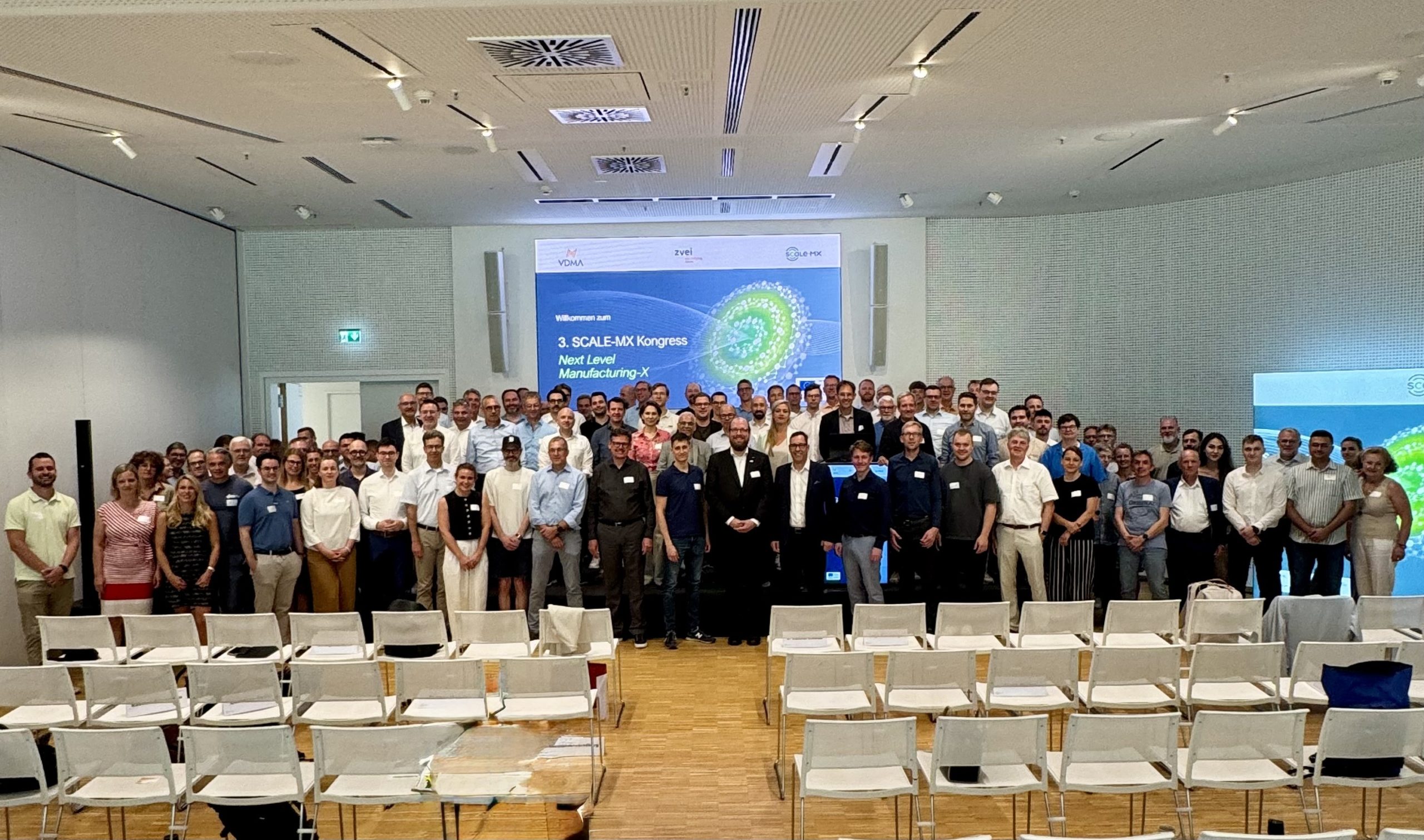
The 3rd SCALE-MX Congress on June 25, 2026, at HOLM in Frankfurt am Main, organized by the consortium leaders VDMA and ZVEI.
Representatives from industry, research, and politics came together to take stock, share experiences, and, above all, look to the future. The conclusion of the day was clear: The technological foundation for Manufacturing-X has been laid. NThe next step is to translate it into industrial practice.
At the start of the conference, it became clear where Manufacturing-X stands today and what role the data ecosystem will play in the industry’s competitiveness in the future. The first few years of the project have shown that secure data exchange is technically feasible. The task now is to support companies as they enter data spaces and to facilitate the transition from pilot projects to industrial deployment.
One of the main focuses of the conference was on the results of selected X projects. Participants were given a concise overview of the progress made in various industries, ranging from manufacturing and robotics to semiconductors, energy, and chemicals, all the way to the construction industry and sustainable data applications. The project presentations highlighted just how diverse the fields of application for Manufacturing-X already are today and what solutions have been developed for secure and standardized data exchange.
The parallel technical sessions focused on the technological foundations of Manufacturing-X. Discussions centered on the core components of the data ecosystem, the MX-Port concept as the key to cross-organizational data exchange, and the role of open-source technologies as the foundation for a scalable industrial data infrastructure. At the same time, thematic deep dives demonstrated how data spaces address very specific challenges facing the industry, such as for example through networked quality data, collaborative engineering, data-driven sustainability management, or more efficient data exchange along the supply chain.
Another focus was on the economic potential of Manufacturing-X. The sessions on digital business models demonstrated how companies can develop new smart services through collaborative condition monitoring and the secure exchange of data. At the same time, it became clear what potential for efficiency gains and cost savings industrial data ecosystems already offer today. Small and medium-sized enterprises, in particular, gained practical insights into how to successfully enter the world of data and what initial steps make sense for gaining experience with data exchange.
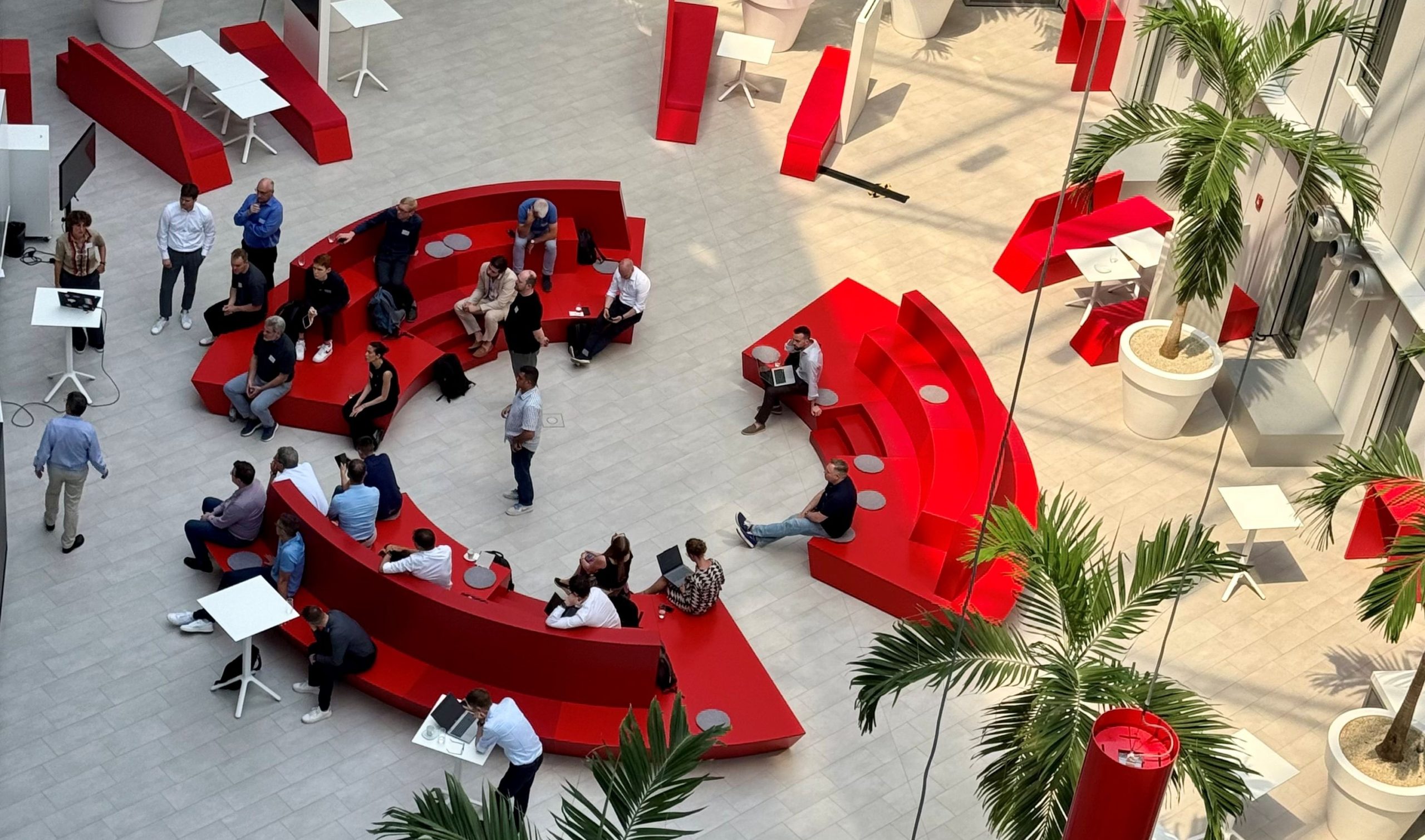
Following the technical discussions, the conference provided an opportunity for networking and direct interaction among the participants.
Anafternoon the focus the focus shifted even more toward practical implementation. The interactive SCALE-MX simulation game “EcoChain” illustrated collaboration in digital value chains, while real-world companies from the lead user’s perspective demonstrated how they are already using data rooms today. Use cases were presented that reduce machine downtime, track products across company boundaries, or successfully implement initial cross-company data exchange processes.
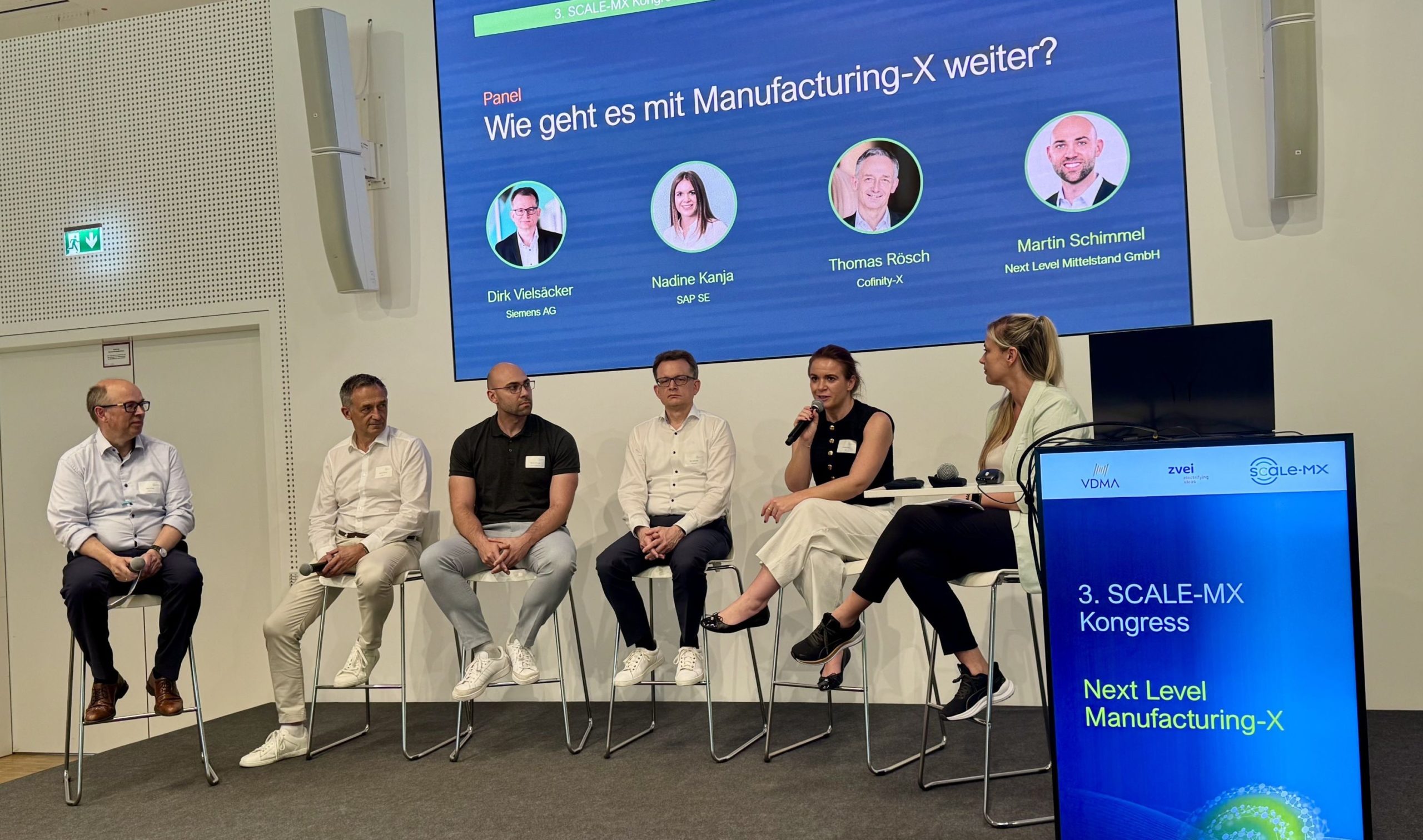
Finally, attention turned to the next stage of development for Manufacturing-X. The focus was on the interplay between industrial AI and data ecosystems. It became clear that high-quality data, exchanged with confidence, forms the foundation for AI-supported applications and new forms of industrial value creation. In the concluding panel discussion, representatives from industry and Manufacturing-Xdiscussed how the results of the first project phase can now be scaled up and permanently embedded in the industry.
The 3rd SCALE-MX Congress demonstrated that Manufacturing-X has successfully completed the transition from the project phase to industrial implementation. The course has been set, and scaling can begin. Standards have been established, technologies are in place, and the first applications are up and running. Now it’s time to Get started andget to work.